

By Gerard Keledjian
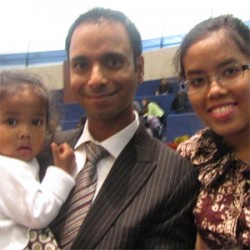
Since he was a child, Rayhan Hossain liked to have options. “My father raised me that way,” he says. So, when he immigrated to Canada in 2007 from Bangladesh – where he was working in healthcare and research – he decided to do it his way and explore his options.
I knew it was not going to be ok right away and that I won’t land here and get a job directly.”
But since he had a positive view, he wanted to take his time to research, have a feel of the life here and look for opportunities to make the permanent move.
That opportunity came in 2010 when the Mennonite New Life Centre of Toronto launched the Bridge Training program for Internationally Trained Psychologists and Allied Mental Health Professionals (BTMH). Rayhan – who holds a PhD in medical sciences – heard from his psychologist friend about BTMH, the only bridging program that prepared immigrant professionals to take their place in the Ontario mental health sector. “Cautiously optimistic”, he attended the information session at the Centre, then decided to give it a shot and applied. He was interviewed and luckily, got accepted into the program.
Having prepared for two years, he was able to fully commit to the one-year bridging program. The first four months were the theoretical part of the program, during which he also enrolled in the employment workshops offered by the Centre. “We were 29-30 participants going to the centere 2-3 days a week. That’s a big number. Staff was helping us and I am thankful that they could accommodate us and make us feel (that we) belong there.” He even enrolled in the linguistic part of the program, though he wasn’t required to. “I think it helped me to improve my English, as it is not my first language.”
He also appreciates the fact that the staff at the Centre were very helpful in accommodating any needs they had to succeed and fully participate in the program.
Through the program, the Mennonite Centre “really bridged my experience and knowledge and put it into practice. They boosted my knowledge and helped me increase my employability.”
As part of the program as well, Rayhan was able to get a placement at the Canadian Mental Health Association and get hired there afterwards.
During his placement Rayhan was confident that he can do the job given the opportunity. “You always need that first opportunity.” Now a graduate of BTMH program, Rayhan continues to assist the Centre in doing “what they do best,” helping other newcomer professionals – like him – who need its services to settle down successfully. And one way he does that, is by sharing his experience and information with recent participants of BTMH who contact him occasionally.
Rayhan has always considered himself successful, even when he was participating in the bridging program and didn’t have a job, just because he was part of the program. “That’s my definition of success,“ he says.
He doesn’t know where he would have been now if he hadn’t had this opportunity through the Centre’s bridging program. But he feels grateful. “Definitely it helped me to be where I am now. I learned a lot!”